
What age can a child start coloring?
Most children make their first deliberate marks on paper between twelve and eighteen months, holding a crayon in a fist. That is the real beginning. Staying inside a line is a separate skill that arrives closer to three, and waiting for it before handing over a crayon means waiting about eighteen months too long.
The question behind the question is usually different: not when a child can hold a crayon, but when giving one stops being a waste of paper. The honest answer is that it is never a waste, because what the child is learning at twelve months has nothing to do with the picture. They are learning that their own movement changes the world outside their body. That is the whole lesson, and a scribbled-over page is proof it landed.
Between about twelve and eighteen months a child can leave a mark on paper on purpose and repeat the movement to see it happen again. The crayon is usually held in the whole hand, with the movement coming from the shoulder and elbow, so the lines are long and sweeping. Aiming them along a drawing comes later.
By about eighteen months to two years the scribbling becomes controlled. The child scribbles without being shown first, can copy a line someone else has just drawn, and produces looping round marks and up and down strokes on purpose. The marks now mostly land on the drawing rather than all over the table.
Between two and three the child starts aiming. They can copy a vertical line, a horizontal line and a circle, and they get most of the color onto the drawing while crossing the outline freely. This is the stage parents most often misread as failure. Crossing the line here is not a mistake, it is what aiming looks like before the hand catches up with the eye.
Around three, and more reliably closer to four, staying inside the outline becomes possible and the child begins to notice when the color goes out. A cross can be copied around four. This is also the point where a book made for the first stage starts to feel too easy.
The practical rule for the first crayon is simple. Give a thick crayon, not a pencil or a marker. Sit the child at a table with one sheet, not a whole book. Expect the first sessions to last two or three minutes and to end when the child stands up, not when the page is finished. None of that is a problem to fix. It is exactly what the beginning looks like.
Questions parents ask
Can a 1 year old use a coloring book?
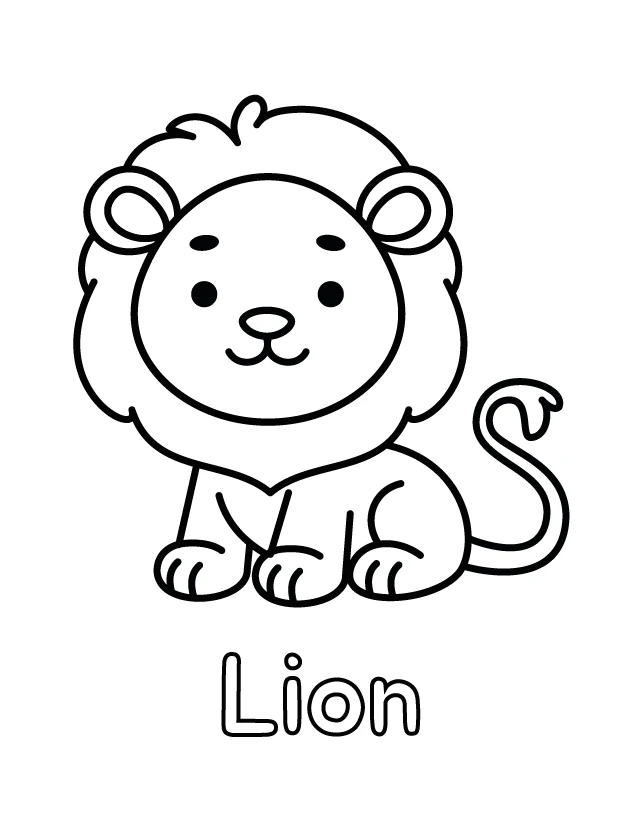
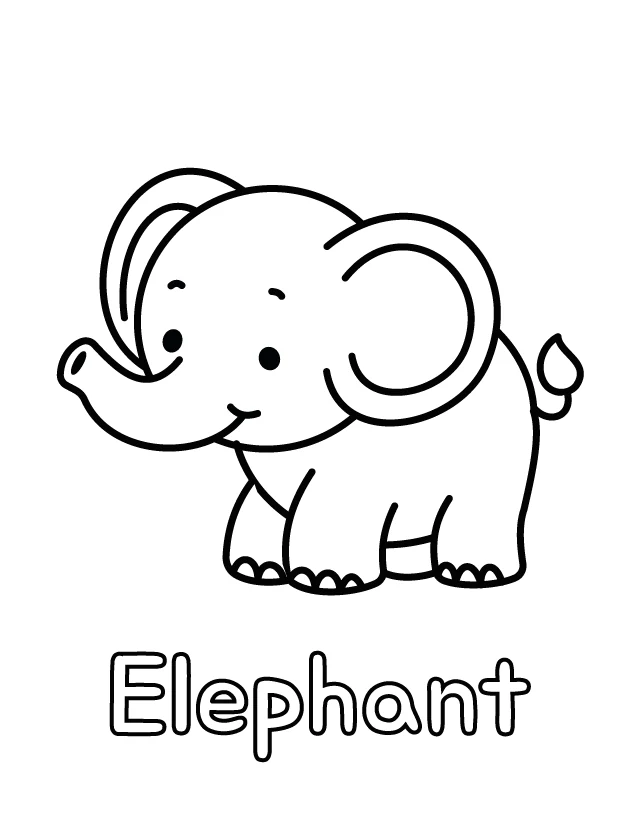
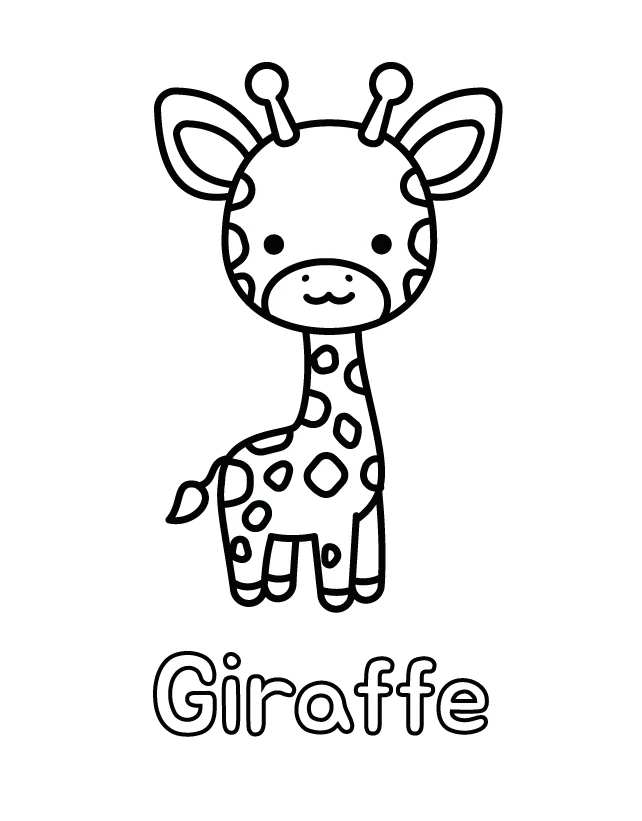
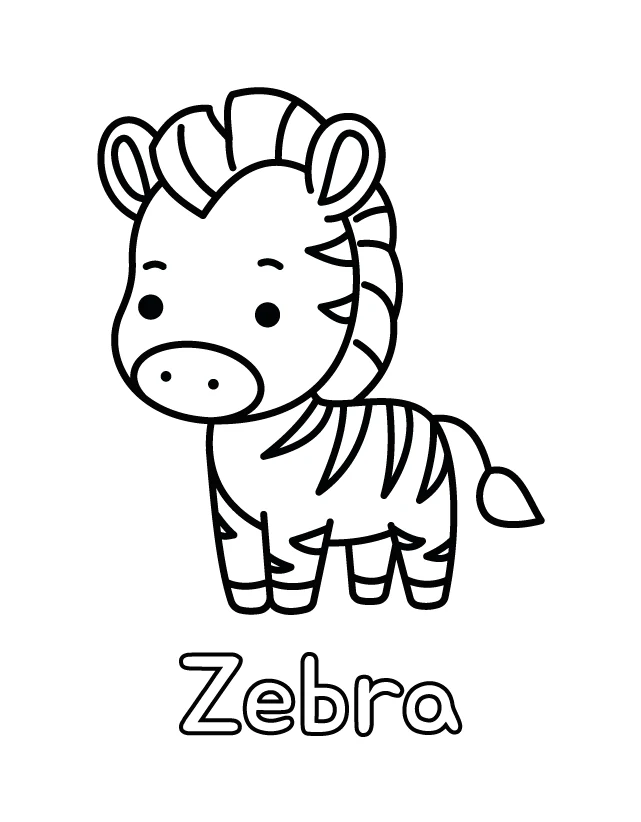
Yes, with the right kind of page. At a year old a child usually holds the crayon in the whole hand and makes broad sweeping marks, so one large shape filling most of the sheet, with a very thick outline and few details, suits them best. On a page like that it is easier for a child to see the traces of their own movements and the result of what they did.
Is it safe to give a one year old crayons?
Use crayons labelled non-toxic and large enough that they cannot be swallowed, and stay at the table while the child uses them. Children at this age put things in their mouths, and a thick chunky crayon is chosen as much for that reason as for the grip.
How long should the first coloring session last?
Two or three minutes is a perfectly normal length at the very beginning. If the child has lost interest, there is no need to ask them to finish the page. Sessions usually grow longer as the child gets older.
Where this fits in development
- First marksabout 12 to 18 months. Holds a crayon in a fist and makes marks on paper on purpose
If you were looking for an age instead
- Coloring pages for a 1 year old: what suits and what to expectOne large shape filling the sheet, a very thick outline and thick crayons. What the hand does at this age, and how a session actually goes.
We publish one coloring book for this age: 111 drawings, thick outlines, one on every page.About the book
Read next
- Crayons, markers or colored pencils: what to give a toddlerThick wax crayons are the best place to start. They leave a visible mark without much pressure and are easy to hold. Was...
- Coloring with a toddler without the messMost of the mess around coloring can be reduced in three simple ways: choose suitable materials, give the child a large ...
- How long will a toddler actually sit and color?Two or three minutes may be enough at the very beginning. At around two the interest in one page often lasts about five ...
Where the developmental facts come from
Ages on this site are typical ranges, not deadlines. Children reach these points at their own pace, and a few months either way is ordinary.
- Learn the Signs. Act Early.Centers for Disease Control and Prevention
- Hand and Finger Skills: 2 Year OldsAmerican Academy of Pediatrics, HealthyChildren.org
- Developmental MilestonesStatPearls, National Library of Medicine
- Developmental Milestones: Fine Motor and Visual Motor SkillsChildren's Hospital of Orange County