
Coloring pages for a 1 year old: what suits and what to expect
One large shape filling the sheet, a very thick outline and thick crayons. What the hand does at this age, and how a session actually goes.
A one year old needs a page where a single drawing takes up almost the whole sheet, the outline is very thick, and there is nothing separate to fill inside the shape. The reason is in the hand: the crayon sits in a fist and the arm moves from the shoulder, so every mark comes out long and sweeping. A thin line disappears under a crayon held that way, and the child sees no result from what they just did.
At one, a child is not filling the drawing and not aiming at it. They make a mark on purpose and repeat the movement to watch it happen again, and the target is the sheet itself rather than the picture on it. Marks that cross the drawing, run off the edge and land on the table are not a failed session, they are what this age looks like.
What to look for on the page: an outline about as thick as the crayon itself, one shape filling the sheet, sturdy paper because the pressure at this age is heavy enough to tear a thin one, and a subject the child can already name out loud, like a ball, a cat or an apple. Thick crayons and colored pencils are the easiest tools to start with.
A session at one year old lasts a minute or two, and that is a normal length rather than a short one. Say out loud what is on the page, let the child pick the crayon themselves, and leave the marks alone. The right moment to stop is when the child gets up from the table, not when the page is filled in: at this age a filled in page usually does not happen at all.
How to run the session
- Name the drawing out loud before the crayon touches the paper, and name it again when the child looks up.
- Offer two or three crayons and let the child choose, rather than handing over one.
- Sit beside the child and mark on your own sheet, not on theirs.
- Stop when interest goes, and leave the same page out to come back to later.
Questions parents ask
Can a one year old use a coloring book at all?
Yes, if the page is made for the youngest children: one large shape, a very thick outline and few small details. At a year old a child is mainly discovering that a crayon leaves a trace on paper, and gradually connecting a picture with its name. Filling the shape neatly is not expected yet.
My child just scribbles across the whole page. Is that normal?
Yes. At a year old a child usually cannot aim the crayon along the drawing. They often hold it in the whole hand and work with broad movements of the arm. Marks that cross the drawing and run off the sheet are entirely natural at this age.
Which crayons work for a one year old?
Thick crayons made for young children are the better choice. They are comfortable to hold in the whole hand and leave a wide mark that is easy to see. Thin colored pencils are harder to use, because they call for a more precise finger grip. At this age it helps for a child to color with an adult sitting alongside.
How long should a one year old sit and color?
A minute or two is a perfectly normal length for a one year old. Sometimes the interest lasts longer, sometimes it fades almost at once. End the session when the child stops being interested, and come back to the same drawing later if they want to.
The book we publish for this stage
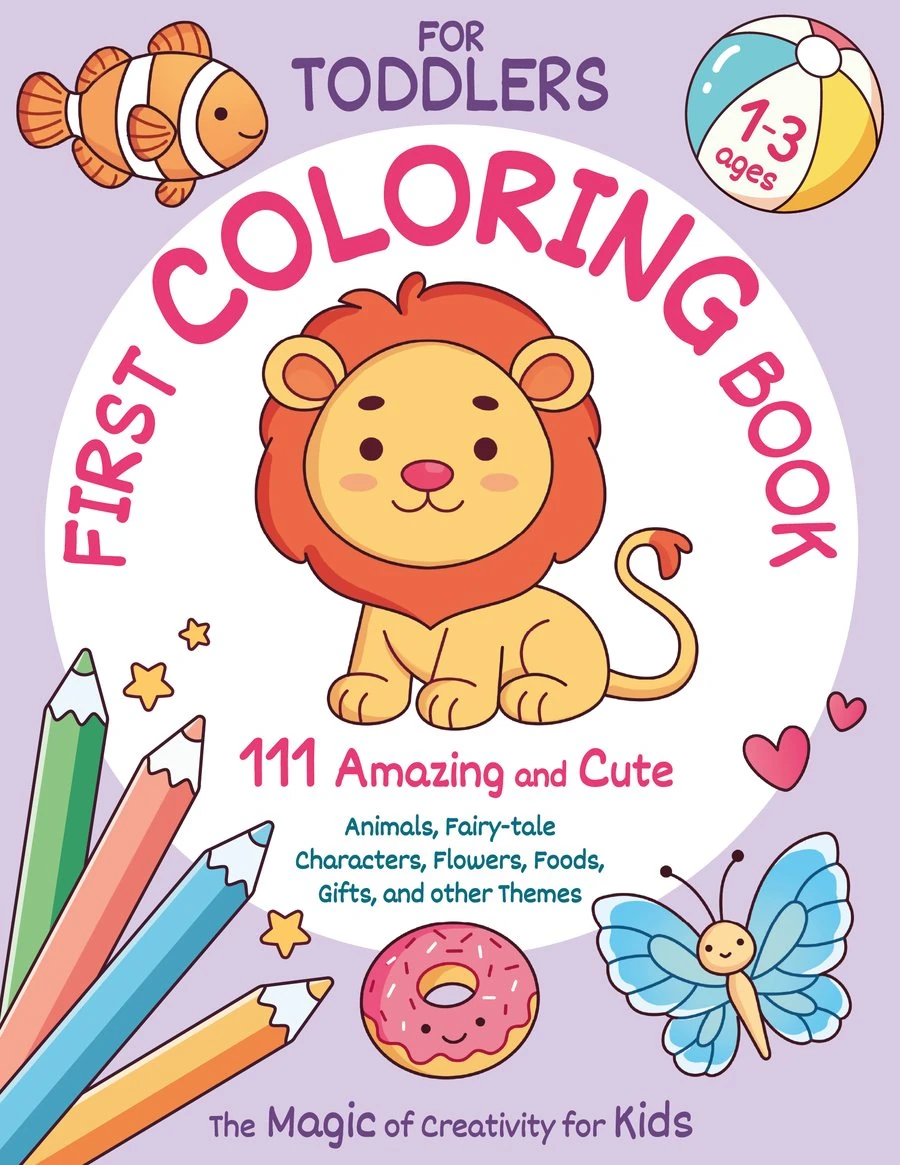
First Coloring Book for Toddlers Ages 1-3
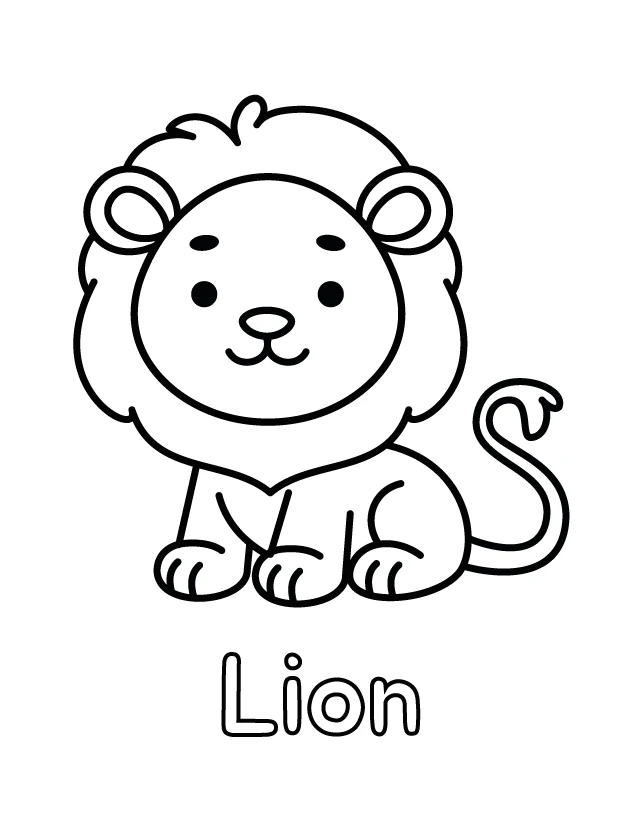
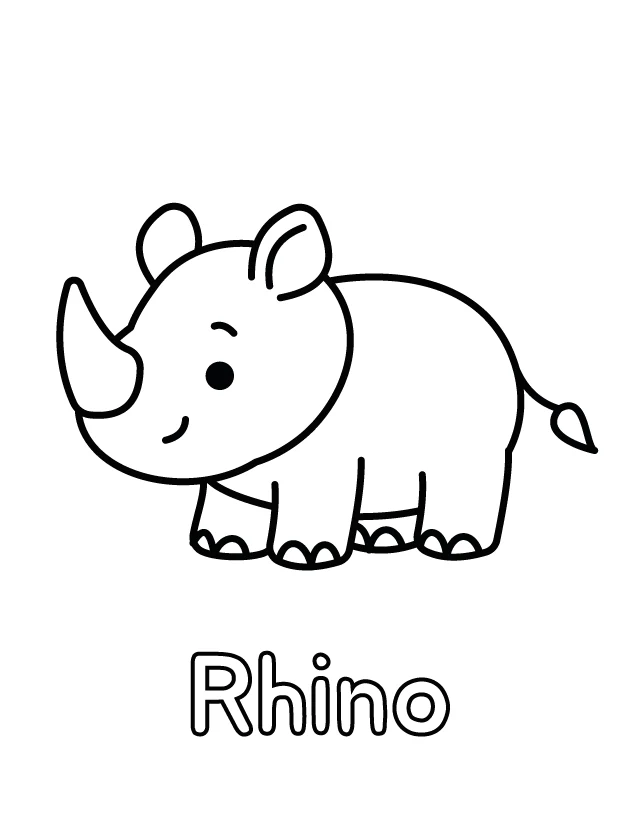
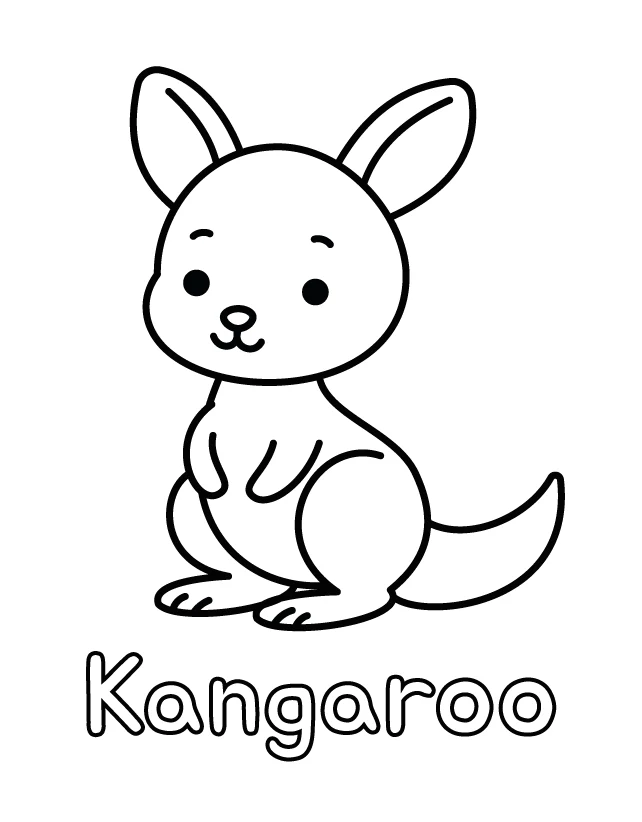
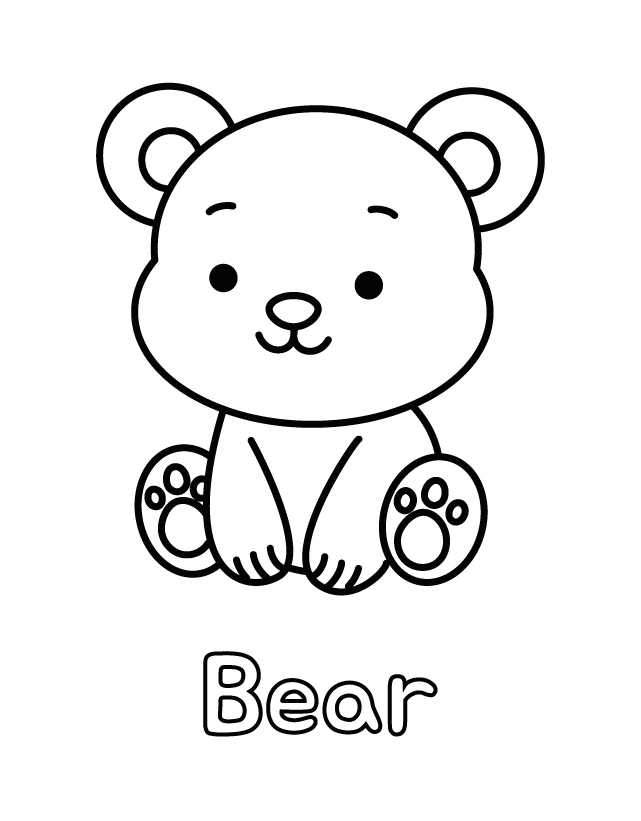
A first coloring book works best with big, simple drawings and thick outlines, with no small detail and nothing extra on the page. One picture per page makes it easier for a child to stay with it and color on their own. This book is built on that principle: 111 hand drawn pictures, each filling almost the whole sheet. Under every picture sits its name in hollow letters, which can be colored too.
Buy the paperback on Amazon · $6.99 Which paper size do you print on? You pay here, and the link arrives by email right after checkout. Print it at home as many times as you need.Get the printable file · $3.99
Sold and shipped by Amazon. We earn from the sale.
The full description of the book, with all 111 drawings and parents' questions, is on its page in the publisher's catalog: coloring book for 1 year olds.
Other ages
- Coloring pages for a 2 year old: what suits and what to expectA large recognizable subject, an outline that is still thick, and two or three parts inside the shape. What changes at two, and what does not change yet.
- Coloring pages for a 3 year old: what suits and what to expectA large drawing with three to six separate areas, a bold outline and room to add something. Where a first coloring book still fits, and where it starts running out.
- First marksabout 12 to 18 months. How the hand develops at this point
- Choose a bookAnswer four questions about your child
- What these recommendations are based onWhich signs the picker weighs, where the age ranges come from, and what this tool does not do.
Where the developmental facts come from
Ages on this site are typical ranges, not deadlines. Children reach these points at their own pace, and a few months either way is ordinary.
- Learn the Signs. Act Early.Centers for Disease Control and Prevention
- Hand and Finger Skills: 2 Year OldsAmerican Academy of Pediatrics, HealthyChildren.org
- Developmental MilestonesStatPearls, National Library of Medicine
- Developmental Milestones: Fine Motor and Visual Motor SkillsChildren's Hospital of Orange County