
Aiming at the shape: coloring at about 2 to 3 years
Neat edges are not the goal yet. Crossing the line at this stage is not a mistake, it is what aiming looks like before the hand catches up.
What a child at this stage can usually do
- Copies a vertical line, a horizontal line and a circle when shown
- Holds the crayon with the fingers rather than the whole fist
- Aims at the drawing and gets most of the color onto it, crossing the outline freely
- Names what is on the page before starting
What to look for in a page
- Bold outlines, with a few separate areas inside the shape to fill
- Drawings the child recognizes without being told what they are
- Enough variety that no two pages in a row feel the same
- Room at the edge of the page, so a child who wants to add a sun has somewhere to put it
How it actually goes at the table
The sheet changes character here. Most of the color lands on the drawing itself, the outline is crossed freely and without concern, and the child often announces what they are doing before and during the work. Colors have nothing to do with real life yet: a blue cat and a purple apple are normal and are not mistakes.
A session runs about five to ten minutes, and for the first time the child may finish a page rather than abandon it.
If the child gives up quickly at this age, look at the page rather than the child. A drawing that is too small, or one broken into separate parts to fill, asks for a hand that is not ready. One large shape brings them back.
The most common mistake is correcting the color. Saying that a cat is not blue turns a child's own decision into a wrong answer, and at this age that is the fastest way to end interest in coloring. The second most common is finishing the page for them after they walk away.

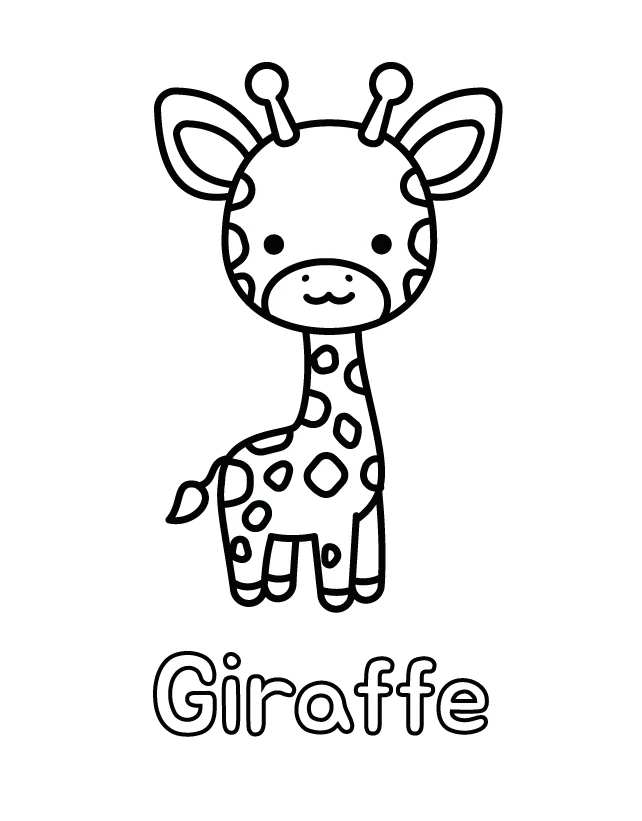
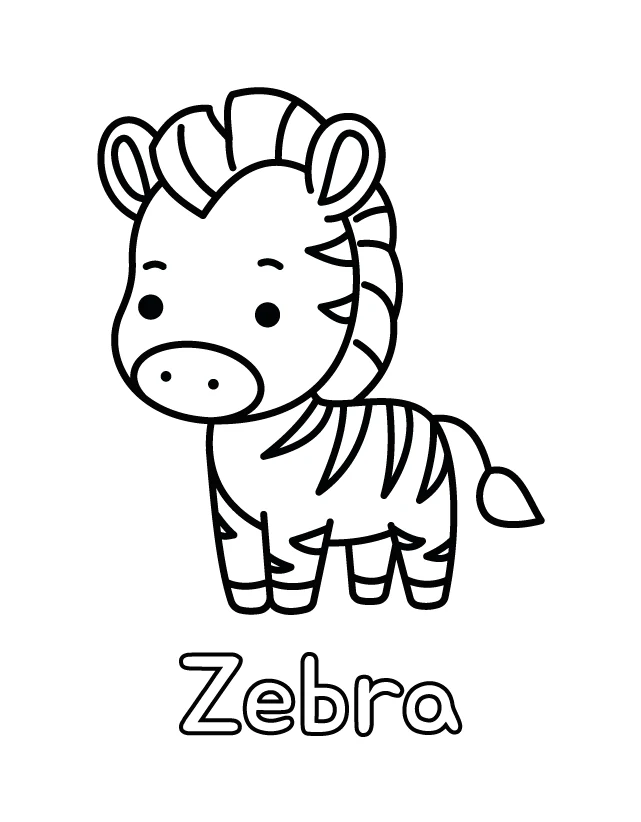

The book we publish for this stage
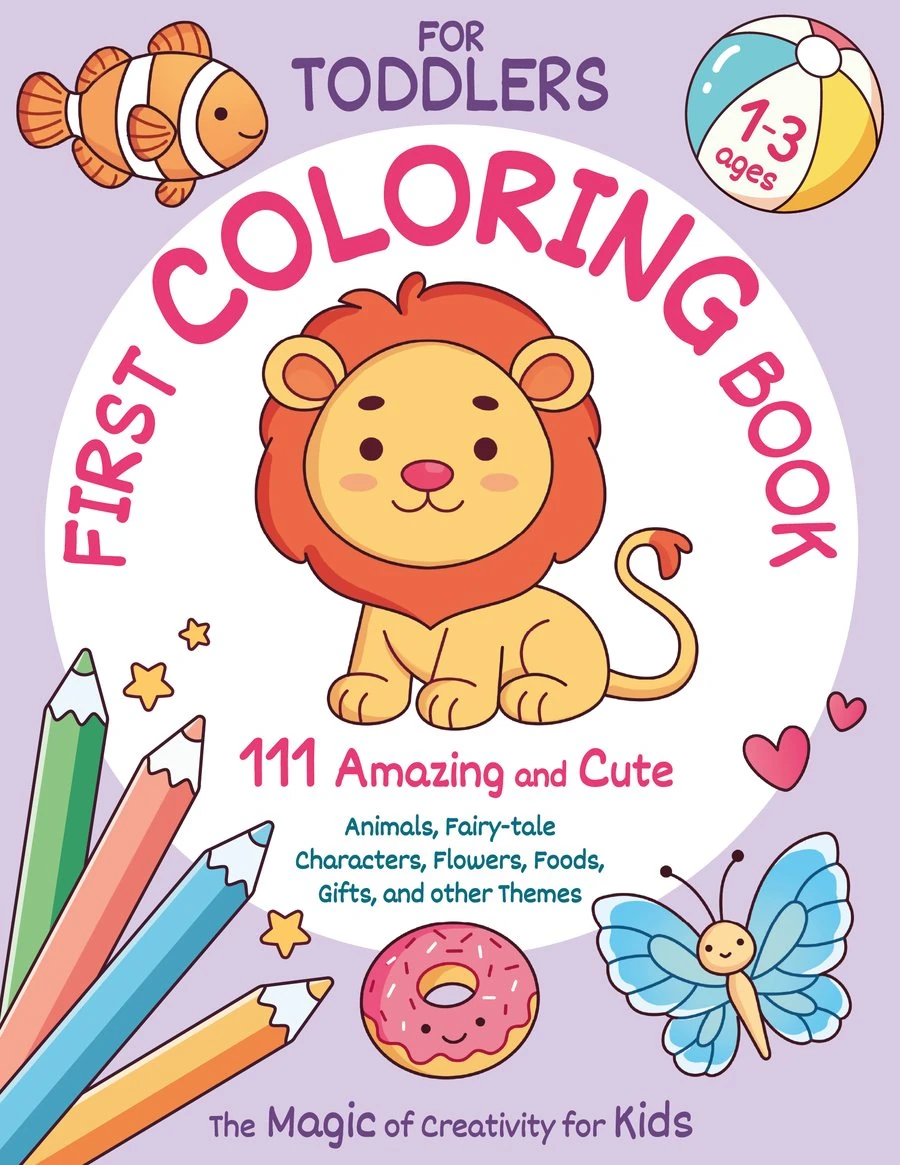
First Coloring Book for Toddlers Ages 1-3
A first coloring book works best with big, simple drawings and thick outlines, with no small detail and nothing extra on the page. One picture per page makes it easier for a child to stay with it and color on their own. This book is built on that principle: 111 hand drawn pictures, each filling almost the whole sheet. Under every picture sits its name in hollow letters, which can be colored too.
About the bookBuy the paperback on Amazon · $6.99 Which paper size do you print on? You pay here, and the link arrives by email right after checkout. Print it at home as many times as you need.Get the printable file · $3.99
Sold and shipped by Amazon. We earn from the sale.
Questions parents ask at this stage
These guides answer the questions that come up most often while a child is at this stage: what to draw with, how long a child usually sits with one page, and what to do about the mess.
- How long will a toddler actually sit and color?Two or three minutes may be enough at the very beginning. At around two the interest in one page often lasts about five ...
- Types of coloring books for toddlers: traditional, reusable, water-reveal and mess-freeFor a child who is just beginning to draw, a traditional paper coloring book with thick outlines is usually the best pla...
- What the labels on a box of crayons actually meanIn the United States, art materials are subject to federal labeling requirements, and the statement Conforms to ASTM D-4...
Before and after this stage
- Controlled scribblingabout 18 months to 2 years. Scribbles without being shown first, and can copy a line someone else draws
- Inside the lineabout 3 to 4 years and up. Copies a circle accurately, and a cross closer to four years old
If you were looking for an age instead
- Coloring pages for a 3 year old: what suits and what to expectA large drawing with three to six separate areas, a bold outline and room to add something. Where a first coloring book still fits, and where it starts running out.
- What these recommendations are based onWhich signs the picker weighs, where the age ranges come from, and what this tool does not do.
Where the developmental facts come from
Ages on this site are typical ranges, not deadlines. Children reach these points at their own pace, and a few months either way is ordinary.
- Learn the Signs. Act Early.Centers for Disease Control and Prevention
- Hand and Finger Skills: 2 Year OldsAmerican Academy of Pediatrics, HealthyChildren.org
- Developmental MilestonesStatPearls, National Library of Medicine
- Developmental Milestones: Fine Motor and Visual Motor SkillsChildren's Hospital of Orange County